Helping other people lose their fear of dogs!
November 24, 2009
As dog owners I believe we all have a responsibility to help members of the public that are afraid of dogs, not by pushing our dogs at them, but by demonstrating the dog is under control and therefor no threat!
Never dismiss anyone’s fear of dogs, it is real and respect of another’s feelings is the first step to helping them get passed their fear.
I was out with one of my dogs one day near the beach, I stood by the car changing my boots, my dog Teddy, was running round nearby, when someone walked into the car park, Teddy was near the entrance and though not taking any notice of the person was obviously to close for comfort for this person, I saw the scared look and the person freeze, my first instinct was to call out “it’s okay he won’t hurt you” but immediately realised that was irrelevant for this person and instead shouted “down” to Teddy, who hit the deck immediately and I called him to me, once I had him with me I apologised for the scare they had had, and put Teddy on the lead to further reassure them that they were safe.
I knew they were safe with Teddy on or off the lead, but this person did not, I could see the surprise on the persons face and the relaxed look that soon replaced the scared look. Teddy and I did more in that moment he obeyed me than any verbal reassurance from me could ever have done!
Puppy rules or how to live with a puppy!
October 21, 2009
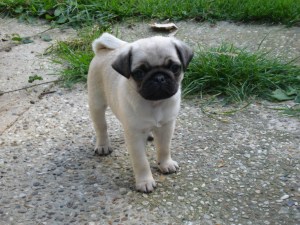
Arabella's puppy now doing well in the show ring!
Dogs are pack animals, which is why they live so well with us in our family units, which to them equates to the ‘pack’. The most successful packs in the wild are those where there are clear rules, boundaries and constraints; every dog knows its job and what it can and can’t do. Their survival depends upon clear rules and consistency. This in itself offers the dog a sense of security.
To give a dog the best possible start within our ‘pack’, we too need to clearly outline and instigate rules and boundaries. Without these, our dog begins to display unwanted behaviours such as play-biting, jumping up uninvited, stealing and behaving like a real ‘wild child’! Often we try to fix the actual problem but the underlying causes remain the same and the behaviour never really disappears.
Here is my list of suggested rules, which would remain in place until the dog is at least 2 years old:
- Restricting the dog’s area when he or she is left alone
- Not allowing the dog on furniture
- Ensuring the dog moves out of our way when required – not us stepping over the dog or around it
- No one is to play rough or ‘fighting’ games with the dog
- Do not allow the dog to play fight/play bite with other dogs living in the household
- No ‘tug of war’ games with the dog
- No jumping up uninvited
- No feeding the dog from the table or plates
- All food and titbits should be ‘worked’ for, for example asking the dog to Sit for his dinner or titbit
- Not constantly responding to the dog’s demands for attention – they do not require constant entertainment
- When returning to the dog, ignoring him or her for at least 5 minutes before greeting (displays leadership skills and reduces over-excitement at your return)
Without rules and boundaries, your success in training your dog will be limited and you will not experience the true joy of a well-adjusted, well-mannered dog, which you can be justifiably proud.
If you experience problems in successfully instigating your rules or do not understand why any of the above are suggested, please contact me.


